Learning Objectives

By the end of this chapter, you will be able to:

  • Explain the growth of American cities in the late nineteenth century
  • Identify the key challenges that Americans faced due to urbanization, as well as some of the possible solutions to those challenges
  • Identify the factors that prompted African American and European immigration to American cities in the late nineteenth century
  • Explain the discrimination and anti-immigration legislation that immigrants faced in the late nineteenth century
  • Identify how each class of Americans—working class, middle class, and upper class—responded to the challenges associated with urban life
  • Explain the process of machine politics and how it brought relief to working-class Americans
  • Explain how American writers, both fiction and nonfiction, helped Americans to better understand the changes they faced in the late nineteenth and early twentieth centuries
  • Identify some of the influential women and African American writers of the era
TODO: alt text

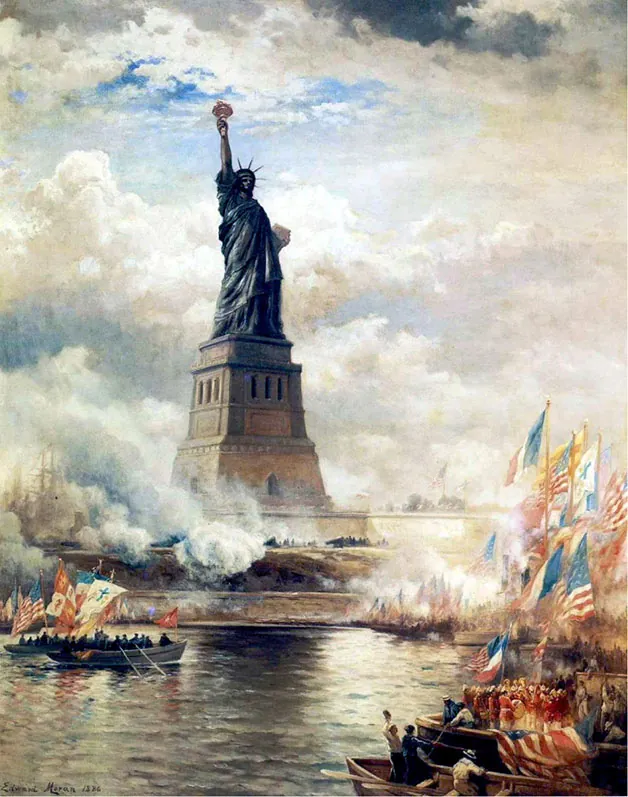
📌 Figure 19.1* For the millions of immigrants arriving by ship in New York City’s harbor, the sight of the Statue of Liberty, as in Unveiling the Statue of Liberty (1886) by Edward Moran, stood as a physical representation of the new freedoms and economic opportunities they hoped to find.*

“We saw the big woman with spikes on her head.” So begins Sadie Frowne’s first memory of arriving in the United States. Many Americans experienced in their new home what the thirteen-year-old Polish girl had seen in the silhouette of the Statue of Liberty (Figure 19.1): a wondrous world of new opportunities fraught with dangers. Sadie and her mother, for instance, had left Poland after her father’s death. Her mother died shortly thereafter, and Sadie had to find her own way in New York, working in factories and slowly assimilating to life in a vast multinational metropolis. Her story is similar to millions of others, as people came to the United States seeking a better future than the one they had at home.

The future they found, however, was often grim. While many believed in the land of opportunity, the reality of urban life in the United States was more chaotic and difficult than people expected. In addition to the challenges of language, class, race, and ethnicity, these new arrivals dealt with low wages, overcrowded buildings, poor sanitation, and widespread disease. The land of opportunity, it seemed, did not always deliver on its promises.

✪ 19.1 Urbanization and its Challenges

TODO: alt text

📌 Figure 19.2

Urbanization occurred rapidly in the second half of the nineteenth century in the United States for a number of reasons. The new technologies of the time led to a massive leap in industrialization, requiring large numbers of workers. New electric lights and powerful machinery allowed factories to run twenty-four hours a day, seven days a week. Workers were forced into grueling twelve-hour shifts, requiring them to live close to the factories.

While the work was dangerous and difficult, many Americans were willing to leave behind the declining prospects of preindustrial agriculture in the hope of better wages in industrial labor. Furthermore, problems ranging from famine to religious persecution led a new wave of immigrants to arrive from central, eastern, and southern Europe, many of whom settled and found work near the cities where they first arrived. Immigrants sought solace and comfort among others who shared the same language and customs, and the nation’s cities became an invaluable economic and cultural resource.

Although cities such as Philadelphia, Boston, and New York sprang up from the initial days of colonial settlement, the explosion in urban population growth did not occur until the mid-nineteenth century (Figure 19.3) At this time, the attractions of city life, and in particular, employment opportunities, grew exponentially due to rapid changes in industrialization. Before the mid-1800s, factories, such as the early textile mills, had to be located near rivers and seaports, both for the transport of goods and the necessary water power. Production became dependent upon seasonal water flow, with cold, icy winters all but stopping river transportation entirely. The development of the steam engine transformed this need, allowing businesses to locate their factories near urban centers. These factories encouraged more and more people to move to urban areas where jobs were plentiful, but hourly wages were often low and the work was routine and grindingly monotonous.

TODO: alt text

📌 Figure 19.3* As these panels illustrate, the population of the United States grew rapidly in the late 1800s (a). Much of this new growth took place in urban areas (defined by the census as twenty-five hundred people or more), and this urban population, particularly that of major cities (b), dealt with challenges and opportunities that were unknown in previous generations.*

Eventually, cities developed their own unique characters based on the core industry that spurred their growth. In Pittsburgh, it was steel; in Chicago, it was meat packing; in New York, the garment and financial industries dominated; and Detroit, by the mid-twentieth century, was defined by the automobiles it built. But all cities at this time, regardless of their industry, suffered from the universal problems that rapid expansion brought with it, including concerns over housing and living conditions, transportation, and communication. These issues were almost always rooted in deep class inequalities, shaped by racial divisions, religious differences, and ethnic strife, and distorted by corrupt local politics.

Electric Lighting

Thomas Edison patented the incandescent light bulb in 1879. This development quickly became common in homes as well as factories, transforming how even lower- and middle-class Americans lived. Although slow to arrive in rural areas of the country, electric power became readily available in cities when the first commercial power plants began to open in 1882. When Nikola Tesla subsequently developed the AC (alternating current) system for the Westinghouse Electric & Manufacturing Company, power supplies for lights and other factory equipment could extend for miles from the power source. AC power transformed the use of electricity, allowing urban centers to physically cover greater areas. In the factories, electric lights permitted operations to run twenty-four hours a day, seven days a week. This increase in production required additional workers, and this demand brought more people to cities.

Gradually, cities began to illuminate the streets with electric lamps to allow the city to remain alight throughout the night. No longer did the pace of life and economic activity slow substantially at sunset, the way it had in smaller towns. The cities, following the factories that drew people there, stayed open all the time.

Communications Improvements

The telephone, patented in 1876, greatly transformed communication both regionally and nationally. The telephone rapidly supplanted the telegraph as the preferred form of communication; by 1900, over 1.5 million telephones were in use around the nation, whether as private lines in the homes of some middle- and upper-class Americans, or as jointly used “party lines” in many rural areas. By allowing instant communication over larger distances at any given time, growing telephone networks made urban sprawl possible.

In the same way that electric lights spurred greater factory production and economic growth, the telephone increased business through the more rapid pace of demand. Now, orders could come constantly via telephone, rather than via mail-order. More orders generated greater production, which in turn required still more workers. This demand for additional labor played a key role in urban growth, as expanding companies sought workers to handle the increasing consumer demand for their products.

Intracity Transportation

As cities grew and sprawled outward, a major challenge was efficient travel within the city—from home to factories or shops, and then back again. Most transportation infrastructure was used to connect cities to each other, typically by rail or canal. Prior to the 1880s, two of the most common forms of transportation within cities were the omnibus and the horse car. An omnibus was a large, horse-drawn carriage. A horse car was similar to an omnibus, but it was placed on iron or steel tracks to provide a smoother ride. While these horse-driven vehicles worked adequately in smaller, less-congested cities, they were not equipped to handle the larger crowds that developed at the close of the century. The horses had to stop and rest, and horse manure became an ongoing problem.

In 1887, Frank Sprague invented the electric trolley, which worked along the same concept as the horse car, with a large wagon on tracks, but was powered by electricity rather than horses. The electric trolley could run throughout the day and night, like the factories and the workers who fueled them. But it also modernized less important industrial centers, such as the southern city of Richmond, Virginia. As early as 1873, San Francisco engineers adopted pulley technology from the mining industry to introduce cable cars and turn the city’s steep hills into elegant middle-class communities. However, as crowds continued to grow in the largest cities, such as Chicago and New York, trolleys were unable to move efficiently through the crowds of pedestrians (Figure 19.4). To avoid this challenge, city planners elevated the trolley lines above the streets, creating elevated trains, or L-trains, as early as 1868 in New York City, and quickly spreading to Boston in 1887 and Chicago in 1892. Finally, as skyscrapers began to dominate the air, transportation evolved one step further to move underground as subways. Boston’s subway system began operating in 1897, and was quickly followed by New York and other cities.

TODO: alt text

📌 Figure 19.4* Although trolleys were far more efficient than horse-drawn carriages, populous cities such as New York experienced frequent accidents, as depicted in this 1895 illustration from Leslie’s Weekly (a). To avoid overcrowded streets, trolleys soon went underground, as at the Public Gardens Portal in Boston (b), where three different lines met to enter the Tremont Street Subway, the oldest subway tunnel in the United States, opening on September 1, 1897.*

The Rise of Skyscrapers

The last limitation that large cities had to overcome was the ever-increasing need for space. Eastern cities, unlike their midwestern counterparts, could not continue to grow outward, as the land surrounding them was already settled. Geographic limitations such as rivers or the coast also hampered sprawl. And in all cities, citizens needed to be close enough to urban centers to conveniently access work, shops, and other core institutions of urban life. The increasing cost of real estate made upward growth attractive, and so did the prestige that towering buildings carried for the businesses that occupied them. Workers completed the first skyscraper in Chicago, the ten-story Home Insurance Building, in 1885 (Figure 19.5). Although engineers had the capability to go higher, thanks to new steel construction techniques, they required another vital invention in order to make taller buildings viable: the elevator. In 1889, the Otis Elevator Company, led by inventor Elisha Otis, installed the first electric elevator. This began the skyscraper craze, allowing developers in eastern cities to build and market prestigious real estate in the hearts of crowded eastern metropoles.

TODO: alt text

📌 Figure 19.5* While the technology existed to engineer tall buildings, it was not until the invention of the electric elevator in 1889 that skyscrapers began to take over the urban landscape. Shown here is the Home Insurance Building in Chicago, considered the first modern skyscraper.*

THE IMMEDIATE CHALLENGES OF URBAN LIFE

Congestion, pollution, crime, and disease were prevalent problems in all urban centers; city planners and inhabitants alike sought new solutions to the problems caused by rapid urban growth. Living conditions for most working-class urban dwellers were atrocious. They lived in crowded tenement houses and cramped apartments with terrible ventilation and substandard plumbing and sanitation. As a result, disease ran rampant, with typhoid and cholera common. Memphis, Tennessee, experienced waves of cholera (1873) followed by yellow fever (1878 and 1879) that resulted in the loss of over ten thousand lives. By the late 1880s, New York City, Baltimore, Chicago, and New Orleans had all introduced sewage pumping systems to provide efficient waste management. Many cities were also serious fire hazards. An average working-class family of six, with two adults and four children, had at best a two-bedroom tenement. By one 1900 estimate, in the New York City borough of Manhattan alone, there were nearly fifty thousand tenement houses. The photographs of these tenement houses are seen in Jacob Riis’s book, How the Other Half Lives, discussed in the feature above. Citing a study by the New York State Assembly at this time, Riis found New York to be the most densely populated city in the world, with as many as eight hundred residents per square acre in the Lower East Side working-class slums, comprising the Eleventh and Thirteenth Wards.

Churches and civic organizations provided some relief to the challenges of working-class city life. Churches were moved to intervene through their belief in the concept of the

social gospel

the belief that the church should be as concerned about the conditions of people in the secular world as it was with their afterlife

. This philosophy stated that all Christians, whether they were church leaders or social reformers, should be as concerned about the conditions of life in the secular world as the afterlife, and the Reverend Washington Gladden was a major advocate. Rather than preaching sermons on heaven and hell, Gladden talked about social changes of the time, urging other preachers to follow his lead. He advocated for improvements in daily life and encouraged Americans of all classes to work together for the betterment of society. His sermons included the message to “love thy neighbor” and held that all Americans had to work together to help the masses. As a result of his influence, churches began to include gymnasiums and libraries as well as offer evening classes on hygiene and health care. Other religious organizations like the Salvation Army and the Young Men’s Christian Association (YMCA) expanded their reach in American cities at this time as well. Beginning in the 1870s, these organizations began providing community services and other benefits to the urban poor.

In the secular sphere, the

settlement house movement

an early progressive reform movement, largely spearheaded by women, which sought to offer services such as childcare and free healthcare to help the working poor

of the 1890s provided additional relief. Pioneering women such as Jane Addams in Chicago and Lillian Wald in New York led this early progressive reform movement in the United States, building upon ideas originally fashioned by social reformers in England. With no particular religious bent, they worked to create settlement houses in urban centers where they could help the working class, and in particular, working-class women, find aid. Their help included child daycare, evening classes, libraries, gym facilities, and free health care. Addams opened her now-famous Hull House (Figure 19.7) in Chicago in 1889, and Wald’s Henry Street Settlement opened in New York six years later. The movement spread quickly to other cities, where they not only provided relief to working-class women but also offered employment opportunities for women graduating college in the growing field of social work. Oftentimes, living in the settlement houses among the women they helped, these college graduates experienced the equivalent of living social classrooms in which to practice their skills, which also frequently caused friction with immigrant women who had their own ideas of reform and self-improvement.

TODO: alt text

📌 Figure 19.7 Jane Addams opened Hull House in Chicago in 1889, offering services and support to the city’s working poor.

The success of the settlement house movement later became the basis of a political agenda that included pressure for housing laws, child labor laws, and worker’s compensation laws, among others. Florence Kelley, who originally worked with Addams in Chicago, later joined Wald’s efforts in New York; together, they created the National Child Labor Committee and advocated for the subsequent creation of the Children’s Bureau in the U.S. Department of Labor in 1912. Julia Lathrop—herself a former resident of Hull House—became the first woman to head a federal government agency, when President William Howard Taft appointed her to run the bureau. Settlement house workers also became influential leaders in the women’s suffrage movement as well as the antiwar movement during World War I.

✪ 19.2 The African American "Great Migration" and New European Immigration

New cities were populated with diverse waves of new arrivals, who came to the cities to seek work in the businesses and factories there. While a small percentage of these newcomers were white Americans seeking jobs, most were made up of two groups that had not previously been factors in the urbanization movement: African Americans fleeing the racism of the farms and former plantations in the South, and southern and eastern European immigrants. These new immigrants supplanted the previous waves of northern and western European immigrants, who had tended to move west to purchase land. Unlike their predecessors, the newer immigrants lacked the funds to strike out to the western lands and instead remained in the urban centers where they arrived, seeking any work that would keep them alive.

THE AFRICAN AMERICAN “GREAT MIGRATION”

Between the end of the Civil War and the beginning of the Great Depression, nearly two million African Americans fled the rural South to seek new opportunities elsewhere. While some moved west, the vast majority of this

Great Migration

the name for the large wave of African Americans who left the South after the Civil War, mostly moving to cities in the Northeast and Upper Midwest

, as the large exodus of African Americans leaving the South in the early twentieth century was called, traveled to the Northeast and Upper Midwest. The following cities were the primary destinations for these African Americans: New York, Chicago, Philadelphia, St. Louis, Detroit, Pittsburgh, Cleveland, and Indianapolis. These eight cities accounted for over two-thirds of the total population of the African American migration.

A combination of both “push” and “pull” factors played a role in this movement. Despite the end of the Civil War and the passage of the Thirteenth, Fourteenth, and Fifteenth Amendments to the U.S. Constitution (ending slavery, ensuring equal protection under the law, and protecting the right to vote, respectively), African Americans were still subjected to intense racial hatred. The rise of the Ku Klux Klan in the immediate aftermath of the Civil War led to increased death threats, violence, and a wave of lynchings. Even after the formal dismantling of the Klan in the late 1870s, racially motivated violence continued. According to researchers at the Tuskegee Institute, there were thirty-five hundred racially motivated lynchings and other murders committed in the South between 1865 and 1900. For African Americans fleeing this culture of violence, northern and midwestern cities offered an opportunity to escape the dangers of the South.

In addition to this “push” out of the South, African Americans were also “pulled” to the cities by factors that attracted them, including job opportunities, where they could earn a wage rather than be tied to a landlord, and the chance to vote (for men, at least), supposedly free from the threat of violence. Although many lacked the funds to move themselves north, factory owners and other businesses that sought cheap labor assisted the migration. Often, the men moved first then sent for their families once they were ensconced in their new city life. Racism and a lack of formal education relegated these African American workers to many of the lower-paying unskilled or semi-skilled occupations. More than 80 percent of African American men worked menial jobs in steel mills, mines, construction, and meat packing. In the railroad industry, they were often employed as porters or servants (Figure 19.8). In other businesses, they worked as janitors, waiters, or cooks. African American women, who faced discrimination due to both their race and gender, found a few job opportunities in the garment industry or laundries, but were more often employed as maids and domestic servants. Regardless of the status of their jobs, however, African Americans earned higher wages in the North than they did for the same occupations in the South, and typically found housing to be more available.

TODO: alt text

📌Figure 19.8** African American men who moved north as part of the Great Migration were often consigned to menial employment, such as working in construction or as porters on the railways (a), such as in the celebrated Pullman dining and sleeping cars (b).

However, such economic gains were offset by the higher cost of living in the North, especially in terms of rent, food costs, and other essentials. As a result, African Americans often found themselves living in overcrowded, unsanitary conditions, much like the tenement slums in which European immigrants lived in the cities. For newly arrived African Americans, even those who sought out the cities for the opportunities they provided, life in these urban centers was exceedingly difficult. They quickly learned that racial discrimination did not end at the Mason-Dixon Line, but continued to flourish in the North as well as the South. European immigrants, also seeking a better life in the cities of the United States, resented the arrival of the African Americans, whom they feared would compete for the same jobs or offer to work at lower wages. Landlords frequently discriminated against them; their rapid influx into the cities created severe housing shortages and even more overcrowded tenements. Homeowners in traditionally white neighborhoods later entered into covenants in which they agreed not to sell to African American buyers; they also often fled neighborhoods into which African Americans had gained successful entry. In addition, some bankers practiced mortgage discrimination, later known as “redlining,” in order to deny home loans to qualified buyers. Such pervasive discrimination led to a concentration of African Americans in some of the worst slum areas of most major metropolitan cities, a problem that remained ongoing throughout most of the twentieth century.

So why move to the North, given that the economic challenges they faced were similar to those that African Americans encountered in the South? The answer lies in noneconomic gains. Greater educational opportunities and more expansive personal freedoms mattered greatly to the African Americans who made the trek northward during the Great Migration. State legislatures and local school districts allocated more funds for the education of both blacks and whites in the North, and also enforced compulsory school attendance laws more rigorously. Similarly, unlike the South where a simple gesture (or lack of a deferential one) could result in physical harm to the African American who committed it, life in larger, crowded northern urban centers permitted a degree of anonymity—and with it, personal freedom—that enabled African Americans to move, work, and speak without deferring to every white person with whom they crossed paths. Psychologically, these gains more than offset the continued economic challenges that black migrants faced.

THE CHANGING NATURE OF EUROPEAN IMMIGRATION

Immigrants also shifted the demographics of the rapidly growing cities. Although immigration had always been a force of change in the United States, it took on a new character in the late nineteenth century. Beginning in the 1880s, the arrival of immigrants from mostly southern and eastern European countries rapidly increased while the flow from northern and western Europe remained relatively constant (Table 19.1).

| Region Country | 1870 | 1880 | 1890 | 1900 | 1910 | | --- | --- | --- | --- | --- | --- | | Northern and Western Europe (Totals) | 4,845,679 | 5,499,889 | 7,288,917 | 7,204,649 | 7,306,325 | | Germany | 1,690,533 | 1,966,742 | 2,784,894 | 2,663,418 | 2,311,237 | | Ireland | 1,855,827 | 1,854,571 | 1,871,509 | 1,615,459 | 1,352,251 | | England | 550,924 | 662,676 | 908,141 | 840,513 | 877,719 | | Sweden | 97,332 | 194,337 | 478,041 | 582,014 | 665,207 | | Austria | 30,508 | 38,663 | 123,271 | 275,907 | 626,341 | | Norway | 114,246 | 181,729 | 322,665 | 336,388 | 403,877 | | Scotland | 140,835 | 170,136 | 242,231 | 233,524 | 261,076 | | Southern and Eastern Europe (Totals) | 93,824 | 248,620 | 728,851 | 1,674,648 | 4,500,932 | | Italy | 17,157 | 44,230 | 182,580 | 484,027 | 1,343,125 | | Russia | 4,644 | 35,722 | 182,644 | 423,726 | 1,184,412 | | Poland | 14,436 | 48,557 | 147,440 | 383,407 | 937,884 | | Hungary | 3,737 | 11,526 | 62,435 | 145,714 | 495,609 | | Czechoslovakia | 40,289 | 85,361 | 118,106 | 156,891 | 219,214 |

📌 Table 19.1 Cumulative Total of the Foreign-Born Population in the United States, 1870–1910 (by major country of birth and European region)

The previous waves of immigrants from northern and western Europe, particularly Germany, Great Britain, and the Nordic countries, were relatively well off, arriving in the country with some funds and often moving to the newly settled western territories. In contrast, the newer immigrants from southern and eastern European countries, including Italy, Greece, and several Slavic countries including Russia, came over due to “push” and “pull” factors similar to those that influenced the African Americans arriving from the South. Many were “pushed” from their countries by a series of ongoing famines, by the need to escape religious, political, or racial persecution, or by the desire to avoid compulsory military service. They were also “pulled” by the promise of consistent, wage-earning work.

Whatever the reason, these immigrants arrived without the education and finances of the earlier waves of immigrants, and settled more readily in the port towns where they arrived, rather than setting out to seek their fortunes in the West. By 1890, over 80 percent of the population of New York would be either foreign-born or children of foreign-born parentage. Other cities saw huge spikes in foreign populations as well, though not to the same degree, due in large part to Ellis Island in New York City being the primary port of entry for most European immigrants arriving in the United States.

The number of immigrants peaked between 1900 and 1910, when over nine million people arrived in the United States. To assist in the processing and management of this massive wave of immigrants, the Bureau of Immigration in New York City, which had become the official port of entry, opened Ellis Island in 1892. Today, nearly half of all Americans have ancestors who, at some point in time, entered the country through the portal at Ellis Island. Doctors or nurses inspected the immigrants upon arrival, looking for any signs of infectious diseases (Figure 19.9). Most immigrants were admitted to the country with only a cursory glance at any other paperwork. Roughly 2 percent of the arriving immigrants were denied entry due to a medical condition or criminal history. The rest would enter the country by way of the streets of New York, many unable to speak English and totally reliant on finding those who spoke their native tongue.

TODO: alt text

📌 Figure 19.9* This photo shows newly arrived immigrants at Ellis Island in New York. Inspectors are examining them for contagious health problems, which could require them to be sent back. (credit: NIAID)*

Seeking comfort in a strange land, as well as a common language, many immigrants sought out relatives, friends, former neighbors, townspeople, and countrymen who had already settled in American cities. This led to a rise in ethnic enclaves within the larger city. Little Italy, Chinatown, and many other communities developed in which immigrant groups could find everything to remind them of home, from local language newspapers to ethnic food stores. While these enclaves provided a sense of community to their members, they added to the problems of urban congestion, particularly in the poorest slums where immigrants could afford housing.

The demographic shift at the turn of the century was later confirmed by the Dillingham Commission, created by Congress in 1907 to report on the nature of immigration in America; the commission reinforced this ethnic identification of immigrants and their simultaneous discrimination. The report put it simply: These newer immigrants looked and acted differently. They had darker skin tone, spoke languages with which most Americans were unfamiliar, and practiced unfamiliar religions, specifically Judaism and Catholicism. Even the foods they sought out at butchers and grocery stores set immigrants apart. Because of these easily identifiable differences, new immigrants became easy targets for hatred and discrimination. If jobs were hard to find, or if housing was overcrowded, it became easy to blame the immigrants. Like African Americans, immigrants in cities were blamed for the problems of the day.

Growing numbers of Americans resented the waves of new immigrants, resulting in a backlash. The Reverend Josiah Strong fueled the hatred and discrimination in his bestselling book, Our Country: Its Possible Future and Its Present Crisis, published in 1885. In a revised edition that reflected the 1890 census records, he clearly identified undesirable immigrants—those from southern and eastern European countries—as a key threat to the moral fiber of the country, and urged all good Americans to face the challenge. Several thousand Americans answered his call by forming the American Protective Association, the chief political activist group to promote legislation curbing immigration into the United States. The group successfully lobbied Congress to adopt both an English language literacy test for immigrants, which eventually passed in 1917, and the Chinese Exclusion Act (discussed in a previous chapter). The group’s political lobbying also laid the groundwork for the subsequent Emergency Quota Act of 1921 and the Immigration Act of 1924, as well as the National Origins Act.

✪ 19.3 Relief from the Chaos of Urban Life

Settlement houses and religious and civic organizations attempted to provide some support to working-class city dwellers through free health care, education, and leisure opportunities. Still, for urban citizens, life in the city was chaotic and challenging. But how that chaos manifested and how relief was sought differed greatly, depending on where people were in the social caste—the working class, the upper class, or the newly emerging professional middle class—in addition to the aforementioned issues of race and ethnicity. While many communities found life in the largest American cities disorganized and overwhelming, the ways they answered these challenges were as diverse as the people who lived there. Broad solutions emerged that were typically class specific: The rise of

machine politics

the process by which citizens of a city used their local ward alderman to work the “machine” of local politics to meet local needs within a neighborhood

and popular culture provided relief to the working class, higher education opportunities and suburbanization benefitted the professional middle class, and reminders of their elite status gave comfort to the upper class. And everyone, no matter where they fell in the class system, benefited from the efforts to improve the physical landscapes of the fast-growing urban environment.

THE LIFE AND STRUGGLES OF THE URBAN WORKING CLASS

For the working-class residents of America’s cities, one practical way of coping with the challenges of urban life was to take advantage of the system of machine politics, while another was to seek relief in the variety of popular culture and entertainment found in and around cities. Although neither of these forms of relief was restricted to the working class, they were the ones who relied most heavily on them.

Machine Politics

The primary form of relief for working-class urban Americans, and particularly immigrants, came in the form of machine politics. This phrase referred to the process by which every citizen of the city, no matter their ethnicity or race, was a ward resident with an alderman who spoke on their behalf at city hall. When everyday challenges arose, whether sanitation problems or the need for a sidewalk along a muddy road, citizens would approach their alderman to find a solution. The aldermen knew that, rather than work through the long bureaucratic process associated with city hall, they could work within the “machine” of local politics to find a speedy, mutually beneficial solution. In machine politics, favors were exchanged for votes, votes were given in exchange for fast solutions, and the price of the solutions included a kickback to the boss. In the short term, everyone got what they needed, but the process was neither transparent nor democratic, and it was an inefficient way of conducting the city’s business.

One example of a machine political system was the Democratic political machine

Tammany Hall

a political machine in New York, run by machine boss William Tweed with assistance from George Washington Plunkitt

in New York, run by machine boss William Tweed with assistance from George Washington Plunkitt (Figure 19.10). There, citizens knew their immediate problems would be addressed in return for their promise of political support in future elections. In this way, machines provided timely solutions for citizens and votes for the politicians. For example, if in Little Italy there was a desperate need for sidewalks in order to improve traffic to the stores on a particular street, the request would likely get bogged down in the bureaucratic red tape at city hall. Instead, store owners would approach the machine. A district captain would approach the “boss” and make him aware of the problem. The boss would contact city politicians and strongly urge them to appropriate the needed funds for the sidewalk in exchange for the promise that the boss would direct votes in their favor in the upcoming election. The boss then used the funds to pay one of his friends for the sidewalk construction, typically at an exorbitant cost, with a financial kickback to the boss, which was known as
graft

the financial kickback provided to city bosses in exchange for political favors

. The sidewalk was built more quickly than anyone hoped, in exchange for the citizens’ promises to vote for machine-supported candidates in the next elections. Despite its corrupt nature, Tammany Hall essentially ran New York politics from the 1850s until the 1930s. Other large cities, including Boston, Philadelphia, Cleveland, St. Louis, and Kansas City, made use of political machines as well.

TODO: alt text

📌 Figure 19.10 This political cartoon depicts the control of Boss Tweed, of Tammany Hall, over the election process in New York. Why were people willing to accept the corruption involved in machine politics?

THE UPPER CLASS IN THE CITIES

The American financial elite did not need to crowd into cities to find work, like their working-class counterparts. But as urban centers were vital business cores, where multi-million-dollar financial deals were made daily, those who worked in that world wished to remain close to the action. The rich chose to be in the midst of the chaos of the cities, but they were also able to provide significant measures of comfort, convenience, and luxury for themselves.

Wealthy citizens seldom attended what they considered the crass entertainment of the working class. Instead of amusement parks and baseball games, urban elites sought out more refined pastimes that underscored their knowledge of art and culture, preferring classical music concerts, fine art collections, and social gatherings with their peers. In New York, Andrew Carnegie built Carnegie Hall in 1891, which quickly became the center of classical music performances in the country. Nearby, the Metropolitan Museum of Art opened its doors in 1872 and still remains one of the largest collections of fine art in the world. Other cities followed suit, and these cultural pursuits became a way for the upper class to remind themselves of their elevated place amid urban squalor.

As new opportunities for the middle class threatened the austerity of upper-class citizens, including the newer forms of transportation that allowed middle-class Americans to travel with greater ease, wealthier Americans sought unique ways to further set themselves apart in society. These included more expensive excursions, such as vacations in Newport, Rhode Island, winter relocation to sunny Florida, and frequent trips aboard steamships to Europe. For those who were not of the highly respected “old money,” but only recently obtained their riches through business ventures, the relief they sought came in the form of one book—the annual

Social Register

a de facto directory of the wealthy socialites in each city, first published by Louis Keller in 1886

. First published in 1886 by Louis Keller in New York City, the register became a directory of the wealthy socialites who populated the city. Keller updated it annually, and people would watch with varying degrees of anxiety or complacency to see their names appear in print. Also called the Blue Book, the register was instrumental in the planning of society dinners, balls, and other social events. For those of newer wealth, there was relief found simply in the notion that they and others witnessed their wealth through the publication of their names in the register.

A NEW MIDDLE CLASS

While the working class were confined to tenement houses in the cities by their need to be close to their work and the lack of funds to find anyplace better, and the wealthy class chose to remain in the cities to stay close to the action of big business transactions, the emerging middle class responded to urban challenges with their own solutions. This group included the managers, salesmen, engineers, doctors, accountants, and other salaried professionals who still worked for a living, but were significantly better educated and compensated than the working-class poor. For this new middle class, relief from the trials of the cities came through education and suburbanization.

In large part, the middle class responded to the challenges of the city by physically escaping it. As transportation improved and outlying communities connected to urban centers, the middle class embraced a new type of community—the suburbs. It became possible for those with adequate means to work in the city and escape each evening, by way of a train or trolley, to a house in the suburbs. As the number of people moving to the suburbs grew, there also grew a perception among the middle class that the farther one lived from the city and the more amenities one had, the more affluence one had achieved.

Although a few suburbs existed in the United States prior to the 1880s (such as Llewellyn Park, New Jersey), the introduction of the electric railway generated greater interest and growth during the last decade of the century. The ability to travel from home to work on a relatively quick and cheap mode of transportation encouraged more Americans of modest means to consider living away from the chaos of the city. Eventually, Henry Ford’s popularization of the automobile, specifically in terms of a lower price, permitted more families to own cars and thus consider suburban life. Later in the twentieth century, both the advent of the interstate highway system, along with federal legislation designed to allow families to construct homes with low-interest loans, further sparked the suburban phenomenon.

New Roles for Middle-Class Women

Social norms of the day encouraged middle-class women to take great pride in creating a positive home environment for their working husbands and school-age children, which reinforced the business and educational principles that they practiced on the job or in school. It was at this time that the magazines Ladies' Home Journal and Good Housekeeping began distribution, to tremendous popularity (Figure 19.13).

TODO: alt text

📌 Figure 19.13 The middle-class family of the late nineteenth century largely embraced a separation of gendered spheres that had first emerged during the market revolution of the antebellum years. Whereas the husband earned money for the family outside the home, the wife oversaw domestic chores, raised the children, and tended to the family’s spiritual, social, and cultural needs. The magazine Good Housekeeping, launched in 1885, capitalized on the middle-class woman’s focus on maintaining a pride-worthy home.

While the vast majority of middle-class women took on the expected role of housewife and homemaker, some women were finding paths to college. A small number of men’s colleges began to open their doors to women in the mid-1800s, and co-education became an option. Some of the most elite universities created affiliated women’s colleges, such as Radcliffe College with Harvard, and Pembroke College with Brown University. But more importantly, the first women’s colleges opened at this time. Mount Holyoke, Vassar, Smith, and Wellesley Colleges, still some of the best known women’s schools, opened their doors between 1865 and 1880, and, although enrollment was low (initial class sizes ranged from sixty-one students at Vassar to seventy at Wellesley, seventy-one at Smith, and up to eighty-eight at Mount Holyoke), the opportunity for a higher education, and even a career, began to emerge for young women. These schools offered a unique, all-women environment in which professors and a community of education-seeking young women came together. While most college-educated young women still married, their education offered them new opportunities to work outside the home, most frequently as teachers, professors, or in the aforementioned settlement house environments created by Jane Addams and others.

Education and the Middle Class

Since the children of the professional class did not have to leave school and find work to support their families, they had opportunities for education and advancement that would solidify their position in the middle class. They also benefited from the presence of stay-at-home mothers, unlike working-class children, whose mothers typically worked the same long hours as their fathers. Public school enrollment exploded at this time, with the number of students attending public school tripling from seven million in 1870 to twenty-one million in 1920. Unlike the old-fashioned one-room schoolhouses, larger schools slowly began the practice of employing different teachers for each grade, and some even began hiring discipline-specific instructors. High schools also grew at this time, from one hundred high schools nationally in 1860 to over six thousand by 1900.

The federal government supported the growth of higher education with the Morrill Acts of 1862 and 1890. These laws set aside public land and federal funds to create land-grant colleges that were affordable to middle-class families, offering courses and degrees useful in the professions, but also in trade, commerce, industry, and agriculture (Figure 19.14). Land-grant colleges stood in contrast to the expensive, private Ivy League universities such as Harvard and Yale, which still catered to the elite. Iowa became the first state to accept the provisions of the original Morrill Act, creating what later became Iowa State University. Other states soon followed suit, and the availability of an affordable college education encouraged a boost in enrollment, from 50,000 students nationwide in 1870 to over 600,000 students by 1920.

TODO: alt text

📌 Figure 19.14* This rendering of Kansas State University in 1878 shows an early land-grant college, created by the Morrill Act. These newly created schools allowed many more students to attend college than the elite Ivy League system, and focused more on preparing them for professional careers in business, medicine, and law, as well as business, agriculture, and other trades.*

College curricula also changed at this time. Students grew less likely to take traditional liberal arts classes in rhetoric, philosophy, and foreign language, and instead focused on preparing for the modern work world. Professional schools for the study of medicine, law, and business also developed. In short, education for the children of middle-class parents catered to class-specific interests and helped ensure that parents could establish their children comfortably in the middle class as well.

“CITY BEAUTIFUL”

While the working poor lived in the worst of it and the wealthy elite sought to avoid it, all city dwellers at the time had to deal with the harsh realities of urban sprawl. Skyscrapers rose and filled the air, streets were crowded with pedestrians of all sorts, and, as developers worked to meet the always-increasing demand for space, the few remaining green spaces in the city quickly disappeared. As the U.S. population became increasingly centered in urban areas while the century drew to a close, questions about the quality of city life—particularly with regard to issues of aesthetics, crime, and poverty—quickly consumed many reformers’ minds. Those middle-class and wealthier urbanites who enjoyed the costlier amenities presented by city life—including theaters, restaurants, and shopping—were free to escape to the suburbs, leaving behind the poorer working classes living in squalor and unsanitary conditions. Through the

City Beautiful

a movement begun by Daniel Burnham and Fredrick Law Olmsted, who believed that cities should be built with three core tenets in mind: the inclusion of parks within city limits, the creation of wide boulevards, and the expansion of more suburbs

movement, leaders such as Frederick Law Olmsted and Daniel Burnham sought to champion middle- and upper-class progressive reforms. They improved the quality of life for city dwellers, but also cultivated middle-class-dominated urban spaces in which Americans of different ethnicities, racial origins, and classes worked and lived.

Olmsted, one of the earliest and most influential designers of urban green space, and the original designer of Central Park in New York, worked with Burnham to introduce the idea of the City Beautiful movement at the Columbian Exposition in 1893. There, they helped to design and construct the “White City”—so named for the plaster of Paris construction of several buildings that were subsequently painted a bright white—an example of landscaping and architecture that shone as an example of perfect city planning. From wide-open green spaces to brightly painted white buildings, connected with modern transportation services and appropriate sanitation, the “White City” set the stage for American urban city planning for the next generation, beginning in 1901 with the modernization of Washington, DC. This model encouraged city planners to consider three principal tenets: First, create larger park areas inside cities; second, build wider boulevards to decrease traffic congestion and allow for lines of trees and other greenery between lanes; and third, add more suburbs in order to mitigate congested living in the city itself (Figure 19.15). As each city adapted these principles in various ways, the City Beautiful movement became a cornerstone of urban development well into the twentieth century.

TODO: alt text

📌 Figure 19.15* This blueprint shows Burnham’s vision for Chicago, an example of the City Beautiful movement. His goal was to preserve much of the green space along the city’s lakefront, and to ensure that all city dwellers had access to green space.*

✪ 19.4 Change Reflected in Thought and Writing

In the late nineteenth century, Americans were living in a world characterized by rapid change. Western expansion, dramatic new technologies, and the rise of big business drastically influenced society in a matter of a few decades. For those living in the fast-growing urban areas, the pace of change was even faster and harder to ignore. One result of this time of transformation was the emergence of a series of notable authors, who, whether writing fiction or nonfiction, offered a lens through which to better understand the shifts in American society.

UNDERSTANDING SOCIAL PROGRESS

One key idea of the nineteenth century that moved from the realm of science to the murkier ground of social and economic success was Charles Darwin’s theory of evolution. Darwin was a British naturalist who, in his 1859 work On the Origin of Species, made the case that species develop and evolve through natural selection, not through divine intervention. The idea quickly drew fire from the Anglican Church (although a liberal branch of Anglicans embraced the notion of natural selection being part of God’s plan) and later from many others, both in England and abroad, who felt that the theory directly contradicted the role of God in the earth’s creation. Although biologists, botanists, and most of the scientific establishment widely accepted the theory of evolution at the time of Darwin’s publication, which they felt synthesized much of the previous work in the field, the theory remained controversial in the public realm for decades.

Political philosopher Herbert Spencer took Darwin’s theory of evolution further, coining the actual phrase “survival of the fittest,” and later helping to popularize the phrase social Darwinism to posit that society evolved much like a natural organism, wherein some individuals will succeed due to racially and ethnically inherent traits, and their ability to adapt. This model allowed that a collection of traits and skills, which could include intelligence, inherited wealth, and so on, mixed with the ability to adapt, would let all Americans rise or fall of their own accord, so long as the road to success was accessible to all. William Graham Sumner, a sociologist at Yale, became the most vocal proponent of social Darwinism. Not surprisingly, this ideology, which Darwin himself would have rejected as a gross misreading of his scientific discoveries, drew great praise from those who made their wealth at this time. They saw their success as proof of biological fitness, although critics of this theory were quick to point out that those who did not succeed often did not have the same opportunities or equal playing field that the ideology of social Darwinism purported. Eventually, the concept fell into disrepute in the 1930s and 1940s, as eugenicists began to utilize it in conjunction with their racial theories of genetic superiority.

Other thinkers of the day took Charles Darwin’s theories in a more nuanced direction, focusing on different theories of

realism

a collection of theories and ideas that sought to understand the underlying changes in the United States during the late nineteenth century

that sought to understand the truth underlying the changes in the United States. These thinkers believed that ideas and social constructs must be proven to work before they could be accepted. Philosopher William James was one of the key proponents of the closely related concept of
pragmatism

a doctrine supported by philosopher William James, which held that Americans needed to experiment and find the truth behind underlying institutions, religions, and ideas in American life, rather than accepting them on faith

, which held that Americans needed to experiment with different ideas and perspectives to find the truth about American society, rather than assuming that there was truth in old, previously accepted models. Only by tying ideas, thoughts, and statements to actual objects and occurrences could one begin to identify a coherent truth, according to James. His work strongly influenced the subsequent avant-garde and modernist movements in literature and art, especially in understanding the role of the observer, artist, or writer in shaping the society they attempted to observe. John Dewey built on the idea of pragmatism to create a theory of
instrumentalism

a theory promoted by John Dewey, who believed that education was key to the search for the truth about ideals and institutions

, which advocated the use of education in the search for truth. Dewey believed that education, specifically observation and change through the scientific method, was the best tool by which to reform and improve American society as it continued to grow ever more complex. To that end, Dewey strongly encouraged educational reforms designed to create an informed American citizenry that could then form the basis for other, much-needed progressive reforms in society.

In addition to the new medium of photography, popularized by Riis, novelists and other artists also embraced realism in their work. They sought to portray vignettes from real life in their stories, partly in response to the more sentimental works of their predecessors. Visual artists such as George Bellows, Edward Hopper, and Robert Henri, among others, formed the Ashcan School of Art, which was interested primarily in depicting the urban lifestyle that was quickly gripping the United States at the turn of the century. Their works typically focused on working-class city life, including the slums and tenement houses, as well as working-class forms of leisure and entertainment (Figure 19.16).

TODO: alt text

📌 Figure 19.16* Like most examples of works by Ashcan artists, The Cliff Dwellers, by George Wesley Bellows, depicts the crowd of urban life realistically. (credit: Los Angeles County Museum of Art)*

Novelists and journalists also popularized realism in literary works. Authors such as Stephen Crane, who wrote stark stories about life in the slums or during the Civil War, and Rebecca Harding Davis, who in 1861 published Life in the Iron Mills, embodied this popular style. Mark Twain also sought realism in his books, whether it was the reality of the pioneer spirit, seen in The Adventures of Huckleberry Finn, published in 1884, or the issue of corruption in The Gilded Age, co-authored with Charles Dudley Warner in 1873. The narratives and visual arts of these realists could nonetheless be highly stylized, crafted, and even fabricated, since their goal was the effective portrayal of social realities they thought required reform. Some authors, such as Jack London, who wrote The Call of the Wild, embraced a school of thought called

naturalism

a theory of realism that states that the laws of nature and the natural world were the only relevant laws governing humanity

, which concluded that the laws of nature and the natural world were the only truly relevant laws governing humanity (Figure 19.17).

TODO: alt text

📌 Figure 19.17* Jack London poses with his dog Rollo in 1885 (a). The cover of Jack London’s The Call of the Wild (b) shows the dogs in the brutal environment of the Klondike. The book tells the story of Buck, a dog living happily in California until he is sold to be a sled dog in Canada. There, he must survive harsh conditions and brutal behavior, but his innate animal nature takes over and he prevails. The story clarifies the struggle between humanity’s nature versus the nurturing forces of society.*

Kate Chopin, widely regarded as the foremost woman short story writer and novelist of her day, sought to portray a realistic view of women’s lives in late nineteenth-century America, thus paving the way for more explicit feminist literature in generations to come. Although Chopin never described herself as a feminist per se, her reflective works on her experiences as a southern woman introduced a form of creative nonfiction that captured the struggles of women in the United States through their own individual experiences. She also was among the first authors to openly address the race issue of miscegenation. In her work Desiree’s Baby, Chopin specifically explores the Creole community of her native Louisiana in depths that exposed the reality of racism in a manner seldom seen in literature of the time.

African American poet, playwright, and novelist of the realist period, Paul Laurence Dunbar dealt with issues of race at a time when most reform-minded Americans preferred to focus on other issues. Through his combination of writing in both standard English and black dialect, Dunbar delighted readers with his rich portrayals of the successes and struggles associated with African American life. Although he initially struggled to find the patronage and financial support required to develop a full-time literary career, Dunbar’s subsequent professional relationship with literary critic and Atlantic Monthly editor William Dean Howells helped to firmly cement his literary credentials as the foremost African American writer of his generation. As with Chopin and Harding, Dunbar’s writing highlighted parts of the American experience that were not well understood by the dominant demographic of the country. In their work, these authors provided readers with insights into a world that was not necessarily familiar to them and also gave hidden communities—be it iron mill workers, southern women, or African American men—a sense of voice.

While a few contemporary reviewers saw merit in the book, most criticized it as immoral and unseemly. It was censored, called “pure poison,” and critics railed against Chopin herself. While Chopin wrote squarely in the tradition of realism that was popular at this time, her work covered ground that was considered “too real” for comfort. After the negative reception of the novel, Chopin retreated from public life and discontinued writing. She died five years after its publication. After her death, Chopin’s work was largely ignored, until scholars rediscovered it in the late twentieth century, and her books and stories came back into print. The Awakening in particular has been recognized as vital to the earliest edges of the modern feminist movement.

❦ Primary and Secondary Sources

Sources

Full excerpt text is not yet available for this source. See the full source record.

Henry George, Progress and Poverty, Selections (1879) 1879

Full excerpt text is not yet available for this source. See the full source record.

Rose Cohen on the World Beyond her Immigrant Neighborhood (ca.1897/1918) 1918

Full excerpt text is not yet available for this source. See the full source record.

Ida B. Wells-Barnett, “Lynch Law in America” (1900) 1900

Full excerpt text is not yet available for this source. See the full source record.

Henry Grady on the New South (1886) 1890

Full excerpt text is not yet available for this source. See the full source record.

Henry Adams, The Education of Henry Adams (1918) 1918

Full excerpt text is not yet available for this source. See the full source record.

Jacob Riis, How the Other Half Lives (1890) 1890

Full excerpt text is not yet available for this source. See the full source record.

Andrew Carnegie on “The Triumph of America” (1886) 1886

Full excerpt text is not yet available for this source. See the full source record.

Charlotte Perkins Gilman, “Why I Wrote The Yellow Wallpaper” (1913) 1913