United States History · Chapter 2
2. Early Globalization: The Atlantic World, 1492–1650
The Atlantic World from 1492 to 1650 marks the beginning of globalization, driven by European exploration and colonization, particularly by Spain and Portugal. Columbus's voyages ignited rivalries among European powers, leading to the establishment of colonies and the exploitation of native populations, who faced devastating losses due to disease and violence. The Portuguese initiated the Atlantic slave trade, while Spanish conquests in the Americas, led by figures like Cortés and Pizarro, resulted in significant territorial gains and cultural exchanges. The Protestant Reformation further complicated religious dynamics, influencing colonial ambitions. The Columbian Exchange transformed economies and societies on both sides of the Atlantic, introducing new crops and livestock while devastating indigenous populations with diseases.
Learning Objectives
By the end of this chapter, you will be able to:
- Describe Portuguese exploration of the Atlantic and Spanish exploration of the Americas, and the importance of these voyages to the developing Atlantic World
- Explain the importance of Spanish exploration of the Americas in the expansion of Spain’s empire and the development of Spanish Renaissance culture
- Explain the changes brought by the Protestant Reformation and how it influenced the development of the Atlantic World
- Describe Spain’s response to the Protestant Reformation
- Identify regions where the English, French, and Dutch explored and established settlements
- Describe the differences among the early colonies
- Explain the role of the American colonies in European nations’ struggles for domination
- Describe how Europeans solved their labor problems
- Describe the theory of mercantilism and the process of commodification
- Analyze the effects of the Columbian Exchange
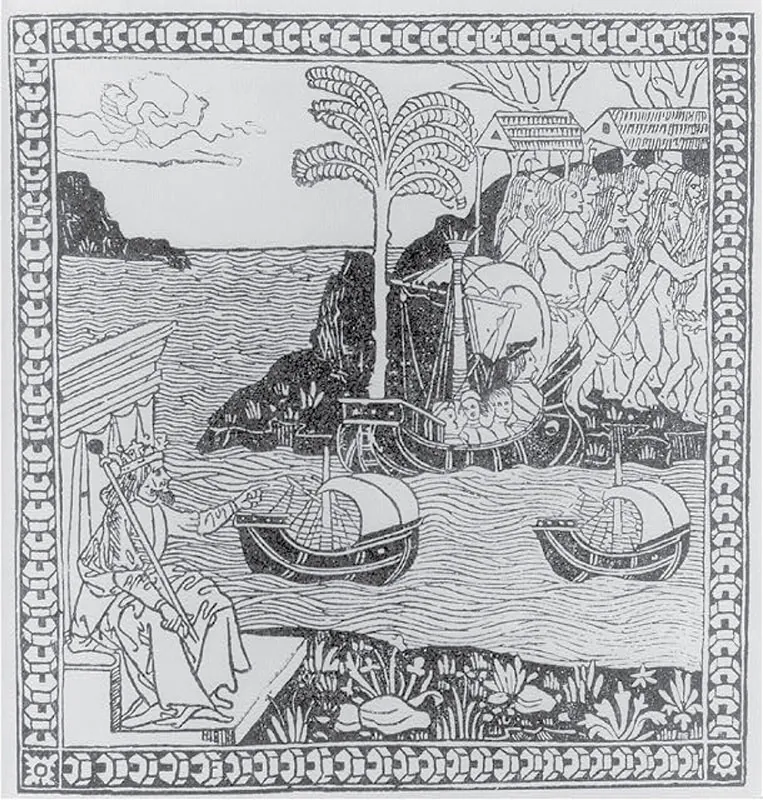
Figure 2.1 After Christopher Columbus “discovered” the New World, he sent letters home to Spain describing the wonders he beheld. These letters were quickly circulated throughout Europe and translated into Italian, German, and Latin. This woodcut is from the first Italian verse translation of the letter Columbus sent to the Spanish court after his first voyage, Lettera delle isole novamente trovata by Giuliano Dati.
The story of the Atlantic World is the story of global migration, a migration driven in large part by the actions and aspirations of the ruling heads of Europe. Columbus is hardly visible in this illustration of his ships making landfall on the Caribbean island of Hispaniolathe island in the Caribbean, present-day Haiti and Dominican Republic, where Columbus landed on his first voyage to the Americas and established a Spanish colony (Figure 2.1). Instead, Ferdinand II of Spain (in the foreground) sits on his throne and points toward Columbus’s landing. As the ships arrive, the Arawak people tower over the Spanish, suggesting the native population density of the islands.
This historic moment in 1492 sparked new rivalries among European powers as they scrambled to create New World colonies, fueled by the quest for wealth and power as well as by religious passions. Almost continuous war resulted. Spain achieved early preeminence, creating a far-flung empire and growing rich with treasures from the Americas. Native Americans who confronted the newcomers from Europe suffered unprecedented losses of life, however, as previously unknown diseases sliced through their populations. They also were victims of the arrogance of the Europeans, who viewed themselves as uncontested masters of the New World, sent by God to bring Christianity to the “Indians.”