United States History · Chapter 5
5. Imperial Reforms and Colonial Protests, 1763-1774
The chapter discusses the imperial reforms and colonial protests from 1763 to 1774, highlighting the aftermath of the French and Indian War, the imposition of taxes like the Stamp Act and Townshend Acts, and the growing unrest among colonists. Key events include Pontiac's Rebellion, the Boston Massacre, and the Boston Tea Party, which fueled resistance against British authority and led to the formation of the First Continental Congress. The chapter illustrates the escalating tensions between the colonies and Britain, culminating in a collective call for rights and representation.
Learning Objectives
By the end of this chapter, you will be able to:
- Discuss the status of Great Britain’s North American colonies in the years directly following the French and Indian War
- Describe the size and scope of the British debt at the end of the French and Indian War
- Explain how the British Parliament responded to the debt crisis
- Outline the purpose of the Proclamation Line, the Sugar Act, and the Currency Act
- Explain the purpose of the 1765 Stamp Act
- Describe the colonial responses to the Stamp Act
- Describe the purpose of the 1767 Townshend Acts
- Explain why many colonists protested the 1767 Townshend Acts and the consequences of their actions
- Describe the socio-political environment in the colonies in the early 1770s
- Explain the purpose of the Tea Act of 1773 and discuss colonial reactions to it
- Identify and describe the Coercive Acts
- Describe the state of affairs between the colonies and the home government in 1774
- Explain the purpose and results of the First Continental Congress
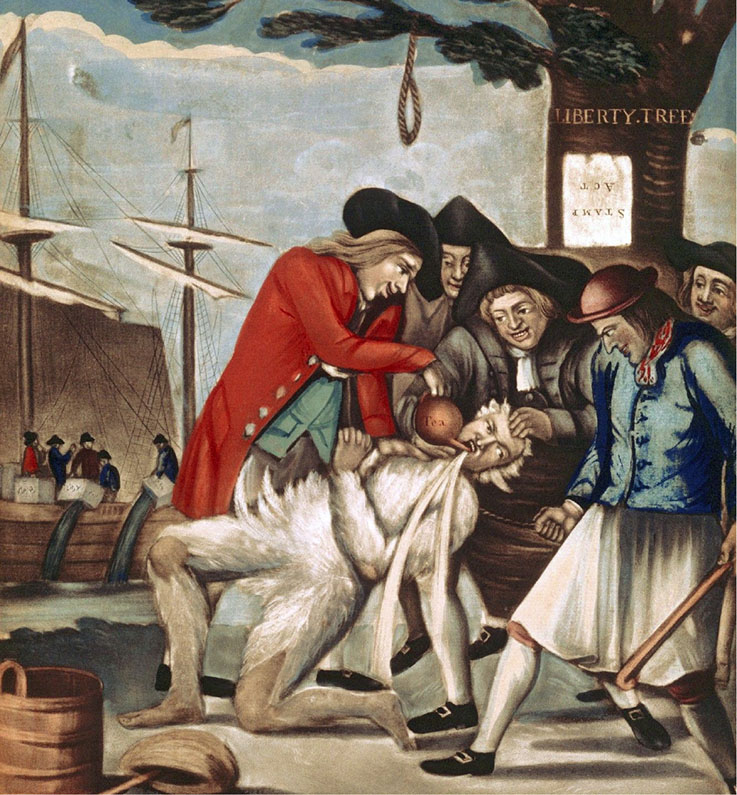
Figure 5.1 The Bostonians Paying the Excise-man, or Tarring and Feathering (1774), attributed to Philip Dawe, depicts the most publicized tarring and feathering incident of the American Revolution. The victim is John Malcolm, a customs official loyal to the British crown.
The Bostonians Paying the Excise-man, or Tarring and Feathering (Figure 5.1), shows five Patriots tarring and feathering the Commissioner of Customs, John Malcolm, a sea captain, army officer, and staunch Loyalist. The print shows the Boston Tea Party, a protest against the Tea Act of 1773, and the Liberty Tree, an elm tree near Boston Common that became a rallying point against the Stamp Act of 1765. When the crowd threatened to hang Malcolm if he did not renounce his position as a royal customs officer, he reluctantly agreed and the protestors allowed him to go home. The scene represents the animosity toward those who supported royal authority and illustrates the high tide of unrest in the colonies after the British government imposed a series of imperial reform measures during the years 1763–1774.
The government’s formerly lax oversight of the colonies ended as the architects of the British Empire put these new reforms in place. The British hoped to gain greater control over colonial trade and frontier settlement as well as to reduce the administrative cost of the colonies and the enormous debt left by the French and Indian War. Each step the British took, however, generated a backlash. Over time, imperial reforms pushed many colonists toward separation from the British Empire.