United States History · Chapter 15
15. The Civil War, 1860–1865
The Civil War (1860-1865) was ignited by the election of Abraham Lincoln, leading to the secession of eleven Southern states and the formation of the Confederate States of America. Key battles included the Wilderness Campaign and Cold Harbor, with significant casualties on both sides. The war evolved into a struggle not only to preserve the Union but also to end slavery, culminating in the Emancipation Proclamation. The Union's advantages in resources and population ultimately led to Confederate defeat, with Lee's surrender at Appomattox Court House marking the war's end.
Learning Objectives
By the end of this chapter, you will be able to:
- Explain the major events that occurred during the Secession Crisis
- Describe the creation and founding principles of the Confederate States of America
- Assess the strengths and weaknesses of the Confederacy and the Union
- Explain the strategic importance of the Battle of Bull Run and the Battle of Shiloh
- Explain what is meant by the term “total war” and provide examples
- Describe mobilization efforts in the North and the South
- Explain why 1863 was a pivotal year in the war
- Describe the reasons why many Americans doubted that Abraham Lincoln would be reelected
- Explain how the Union forces overpowered the Confederacy
Introduction#
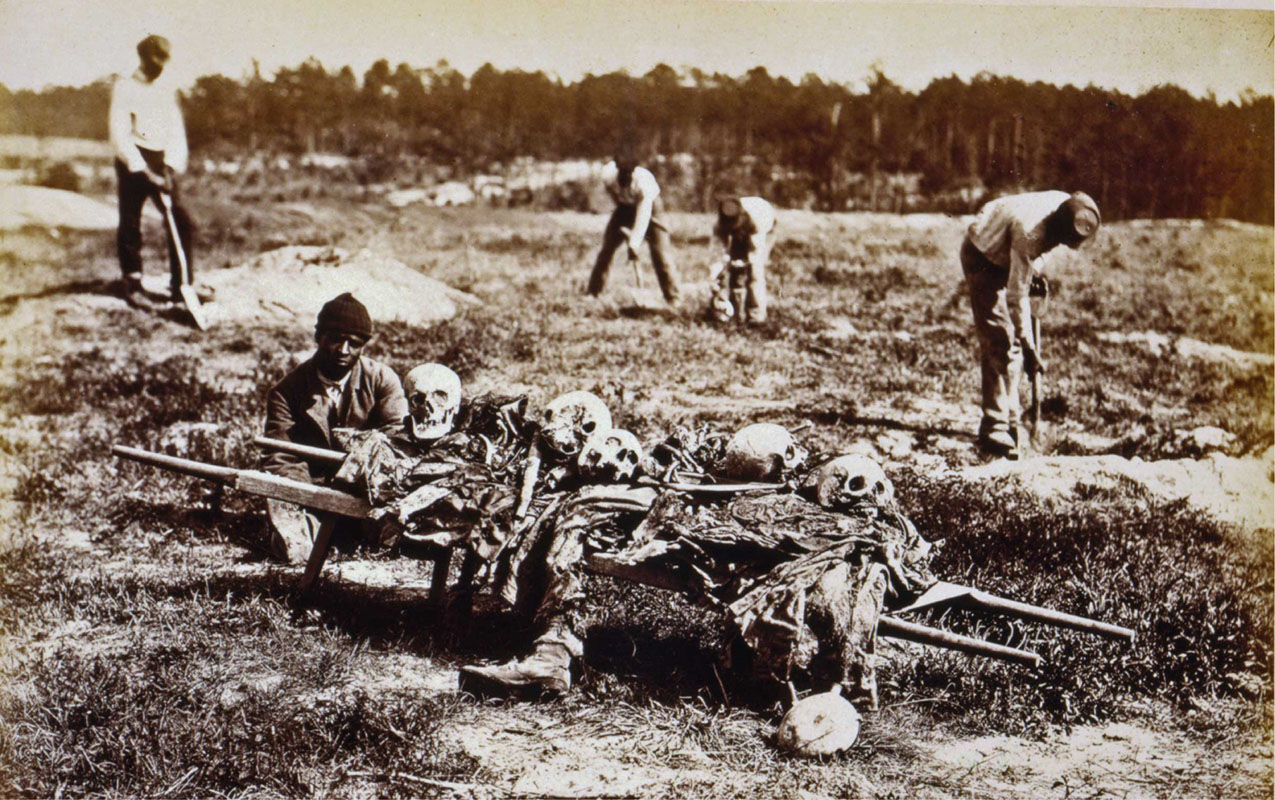
In May 1864, General Ulysses S. Grant ordered the Union’s Army of the PotomacThe Union fighting force operating outside Washington, DC to cross the Rapidan River in Virginia. Grant knew that Confederate general Robert E. Lee would defend the Confederate capital at Richmond at all costs, committing troops that might otherwise be sent to the Shenandoah or the Deep South to stop Union general William Tecumseh Sherman from capturing Atlanta, a key Confederate city. For two days, the Army of the Potomac fought Lee’s troops in the Wilderness, a wooded area along the Rapidan River. Nearly ten thousand Confederate soldiers were killed or wounded, as were more than seventeen thousand Union troops. A few weeks later, the armies would meet again at the Battle of Cold Harbor, where another fifteen thousand men would be wounded or killed. As in many battles, the bodies of those who died were left on the field where they fell. A year later, African Americans, who were often called upon to perform menial labor for the Union army (Figure 15.1), collected the skeletal remains of the dead for a proper burial. The state of the graves of many Civil War soldiers partly inspired the creation of Memorial Day, a day set aside for visiting and decorating the graves of the dead.