United States History · Chapter 6
6. America's War for Independence, 1775-1783
The American War for Independence (1775-1783) began due to escalating tensions between the colonies and Great Britain, highlighted by events like the Boston Tea Party and the subsequent Coercive Acts. The conflict saw diverse colonial support against British rule, culminating in the Declaration of Independence in 1776. Key battles included Lexington, Concord, and Saratoga, which shifted momentum to the Americans. The war ultimately ended with the British surrender at Yorktown in 1781, leading to the Treaty of Paris in 1783, which recognized American independence and established new boundaries. The revolution also created divisions within society, with Loyalists and Patriots clashing, and it raised complex issues regarding slavery and the roles of women and minorities in the fight for independence.
Learning Objectives
By the end of this chapter, you will be able to:
- Explain how Great Britain’s response to the destruction of a British shipment of tea in Boston Harbor in 1773 set the stage for the Revolution
- Describe the beginnings of the American Revolution
- Explain the British and American strategies of 1776 through 1778
- Identify the key battles of the early years of the Revolution
- Outline the British southern strategy and its results
- Describe key American victories and the end of the war
- Identify the main terms of the Treaty of Paris (1783)
- Explain Loyalist and Patriot sentiments
- Identify different groups that participated in the Revolutionary War
Introduction#
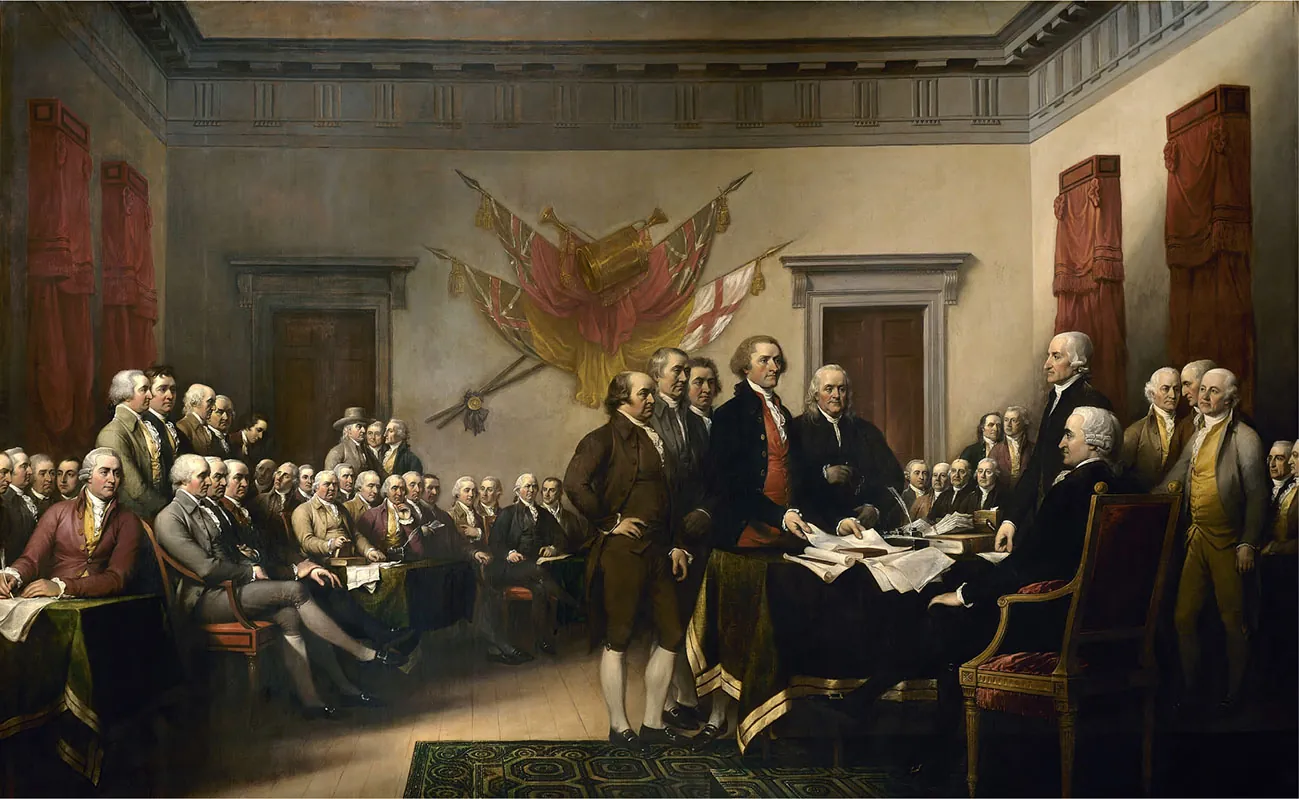
By the 1770s, Great Britain ruled a vast empire, with its American colonies producing useful raw materials and profitably consuming British goods. From Britain’s perspective, it was inconceivable that the colonies would wage a successful war for independence; in 1776, they appeared weak and disorganized, no match for the Empire. Yet, although the Revolutionary War did indeed drag on for eight years, in 1783, the thirteen coloniesthe British colonies in North America that declared independence from Great Britain in 1776, which included Connecticut, Delaware, Georgia, Maryland, the province of Massachusetts Bay, New Hampshire, New Jersey, New York, North Carolina, Pennsylvania, Rhode Island and Providence Plantations, South…, now the United States, ultimately prevailed against the British.
The Revolution succeeded because colonists from diverse economic and social backgrounds united in their opposition to Great Britain. Although thousands of colonists remained loyal to the crown and many others preferred to remain neutral, a sense of community against a common enemy prevailed among Patriots. The signing of the Declaration of Independence (Figure 6.1) exemplifies the spirit of that common cause. Representatives asserted: “That these United Colonies are, and of Right ought to be Free and Independent States; that they are Absolved from all Allegiance to the British Crown, . . . And for the support of this Declaration, . . . we mutually pledge to each other our Lives, our Fortunes and our sacred Honor.”