United States History · Chapter 27
27. Fighting the Good Fight in World War II, 1941-1945
World War II revitalized the U.S. economy post-Great Depression, leading to increased industrial growth and racial tensions. The rise of totalitarian regimes in Europe and Japan prompted U.S. involvement, shifting from isolationism to engagement through policies like Lend Lease. The war effort mobilized the nation, providing new opportunities for women and minorities, while also revealing deep-seated racial divisions. The conflict culminated in significant battles in Europe and the Pacific, ultimately leading to the use of atomic bombs on Hiroshima and Nagasaki, which forced Japan's surrender and reshaped postwar geopolitics.
Learning Objectives
By the end of this chapter, you will be able to:
- Explain the factors in Europe that gave rise to Fascism and Nazism
- Discuss the events in Europe and Asia that led to the start of the war
- Identify the early steps taken by President Franklin D. Roosevelt to increase American aid to nations fighting totalitarianism while maintaining neutrality
- Describe the steps taken by the United States to prepare for war
- Describe how the war changed employment patterns in the United States
- Discuss the contributions of civilians on the home front, especially women, to the war effort
- Analyze how the war affected race relations in the United States
- Identify the major battles of the European theater
- Analyze the goals and results of the major wartime summit meetings
- Discuss the strategy employed against the Japanese and some of the significant battles of the Pacific campaign
- Describe the effects of the atomic bombs on Hiroshima and Nagasaki
- Analyze the decision to drop atomic bombs on Japan
Introduction#
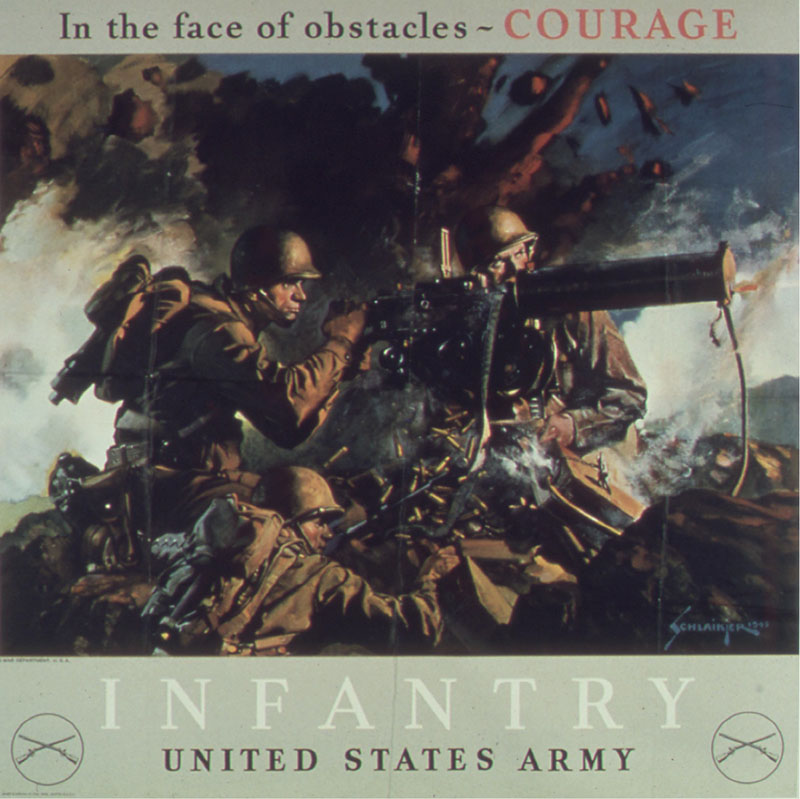
World War II awakened the sleeping giant of the United States from the lingering effects of the Great Depression. Although the country had not entirely disengaged itself from foreign affairs following World War I, it had remained largely divorced from events occurring in Europe until the late 1930s. World War II forced the United States to involve itself once again in European affairs. It also helped to relieve the unemployment of the 1930s and stir industrial growth. The propaganda poster above (Figure 27.1) was part of a concerted effort to get Americans to see themselves as citizens of a strong, unified country, dedicated to the protection of freedom and democracy. However, the war that unified many Americans also brought to the fore many of the nation’s racial and ethnic divisions, both on the frontlines—where military units, such as the one depicted in this poster, were segregated by race—and on the home front. Yet, the war also created new opportunities for ethnic minorities and women, which, in postwar America, would contribute to their demand for greater rights.