United States History · Chapter 8
8. Growing Pains: The New Republic, 1790–1820
The period from 1790 to 1820 saw the emergence of political parties in the U.S., with Federalists advocating for a strong central government and Democratic-Republicans promoting limited government. Key events included the passage of the Bill of Rights, Hamilton's financial programs, the impact of the French Revolution, the Whiskey Rebellion, and the War of 1812. The Louisiana Purchase significantly expanded U.S. territory, while partisan conflicts intensified, culminating in the election of Thomas Jefferson and the decline of Federalist influence.
Learning Objectives
By the end of this chapter, you will be able to:
- Describe the competing visions of the Federalists and the Democratic-Republicans
- Identify the protections granted to citizens under the Bill of Rights
- Explain Alexander Hamilton’s financial programs as secretary of the treasury
- Identify the major foreign and domestic uprisings of the early 1790s
- Explain the effect of these uprisings on the political system of the United States
- Identify key examples of partisan wrangling between the Federalists and Democratic-Republicans
- Describe how foreign relations affected American politics
- Assess the importance of the Louisiana Purchase
- Describe the causes and consequences of the War of 1812
- Identify the important events of the War of 1812 and explain their significance
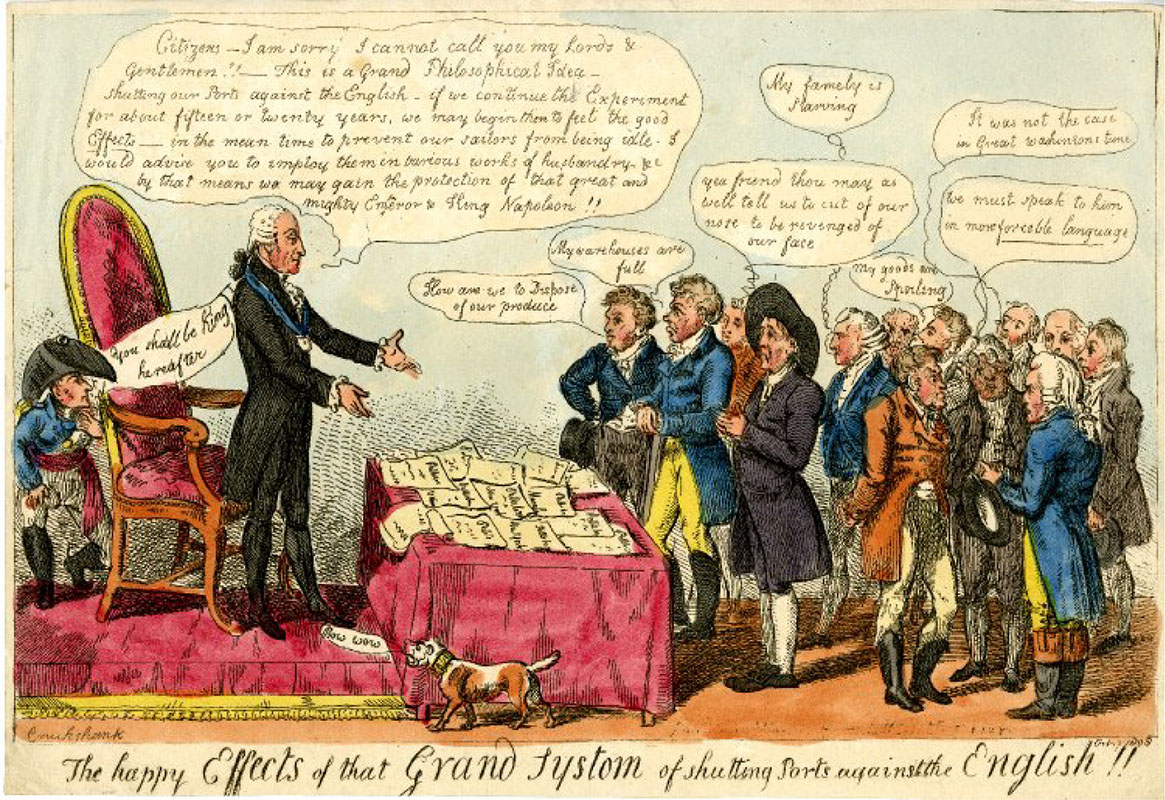
Figure 8.1 “The happy Effects of the Grand Systom [sic] of shutting Ports against the English!!” appeared in 1808. Less than a year earlier, Thomas Jefferson had recommended (and Congress had passed) the Embargo Act of 1807, which barred American ships from leaving their ports.
The partisan political cartoon above (Figure 8.1) lampoons Thomas Jefferson’s 1807 Embargo Act, a move that had a devastating effect on American commerce. American farmers and merchants complain to President Jefferson, while the French emperor Napoleon Bonaparte whispers to him, “You shall be King hereafter.” This image illustrates one of many political struggles in the years after the fight for ratification of the Constitution. In the nation’s first few years, no organized political parties existed. This began to change as U.S. citizens argued bitterly about the proper size and scope of the new national government. As a result, the 1790s witnessed the rise of opposing political parties: the Federalists and the Democratic-Republicansadvocates of limited government who were troubled by the expansive domestic policies of Washington’s administration and opposed the Federalists. Federalists saw unchecked democracy as a dire threat to the republic, and they pointed to the excesses of the French Revolution as proof of what awaited. Democratic-Republicans opposed the Federalists’ notion that only the wellborn and well educated were able to oversee the republic; they saw it as a pathway to oppression by an aristocracy.